Skip to content

The Atlas

Cities

A city is a local government of more built-up barangays, led by a mayor, a vice mayor and the Sangguniang Panlungsod, the city council.[1] Only Congress can make a city, by law, approved in a plebiscite. Since 2001 the law asks for an income of ₱100 million a year and either 100 km² of land or 150,000 people.[1, 2]

A city of 200,000 people and ₱50 million a year can be declared highly urbanized by the President, after a plebiscite.[1] Highly urbanized cities, and independent component cities whose voters do not vote for the province's officials, govern themselves apart from their province; a component city is part of it.[3]
Caloocan CityLas Piñas CityMakati CityMalabon CityMandaluyong CityManilaMarikina CityMuntinlupa CityNavotas CityParañaque CityPasay CityPasig CityQuezon CitySan Juan CityTaguig CityValenzuela CityTabuk CityBaguio CityBatac CityLaoag CityCandon CityVigan CitySan Fernando CityAlaminos CityDagupan CitySan Carlos CityUrdaneta CityTuguegarao CityCauayan CityIlagan CitySantiago CityBalanga CityBaliwag CityMalolos CityMeycauayan CitySan Jose Del Monte CityCabanatuan CityGapan CityScience City of MuñozPalayan CitySan Jose CityMabalacat CitySan Fernando CityTarlac CityAngeles CityOlongapo CityBatangas CityCalaca CityLipa CitySto. Tomas CityTanauan CityBacoor CityCarmona CityCavite CityDasmariñas CityGeneral Trias CityImus CityTagaytay CityTrece Martires CityBiñan CityCabuyao CityCalamba CitySan Pablo CitySan Pedro CitySanta Rosa CityTayabas CityAntipolo CityLucena CityCalapan CityPuerto Princesa CityLegazpi CityLigao CityTabaco CityIriga CityNaga CityMasbate CitySorsogon CityRoxas CityPassi CityIloilo CityBago CityCadiz CityEscalante CityHimamaylan CityKabankalan CityLa Carlota CitySagay CitySan Carlos CitySilay CitySipalay CityTalisay CityVictorias CityBais CityBayawan CityCanlaon CityDumaguete CityGuihulngan CityTanjay CityBacolod CityTagbilaran CityBogo CityCarcar CityDanao CityNaga CityTalisay CityToledo CityCebu CityLapu-Lapu CityMandaue CityBorongan CityBaybay CityOrmoc CityCalbayog CityCatbalogan CityMaasin CityTacloban CityDapitan CityDipolog CityPagadian CityIsabela CityZamboanga CityMalaybalay CityValencia CityOroquieta CityOzamiz CityTangub CityEl Salvador CityGingoog CityCagayan De Oro CityIligan CityPanabo CityIsland Garden City of SamalTagum CityDigos CityMati CityDavao CityKidapawan CityKoronadal CityTacurong CityGeneral Santos CityCabadbaran CityBayugan CitySurigao CityBislig CityTandag CityButuan CityLamitan CityMarawi CityCotabato City

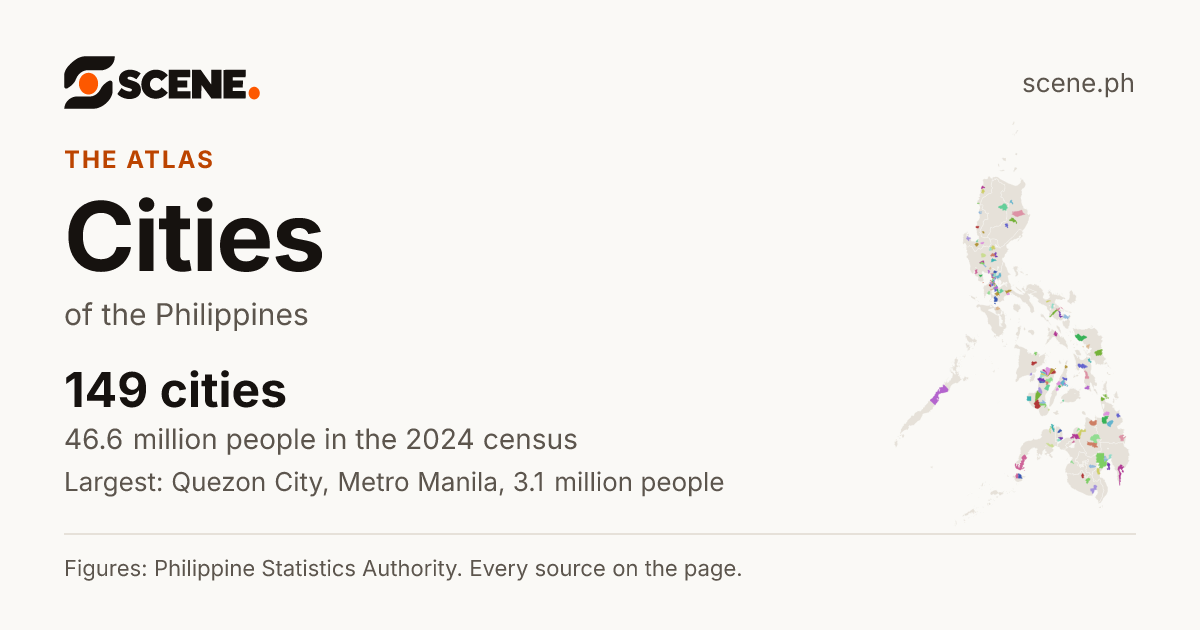
Map of the Philippines, every city in a colour of its own

Caloocan CityLas Piñas CityMakati CityMalabon CityMandaluyong CityManilaMarikina CityMuntinlupa CityNavotas CityParañaque CityPasay CityPasig CityQuezon CitySan Juan CityTaguig CityValenzuela CityTabuk CityBaguio CityBatac CityLaoag CityCandon CityVigan CitySan Fernando CityAlaminos CityDagupan CitySan Carlos CityUrdaneta CityTuguegarao CityCauayan CityIlagan CitySantiago CityBalanga CityBaliwag CityMalolos CityMeycauayan CitySan Jose Del Monte CityCabanatuan CityGapan CityScience City of MuñozPalayan CitySan Jose CityMabalacat CitySan Fernando CityTarlac CityAngeles CityOlongapo CityBatangas CityCalaca CityLipa CitySto. Tomas CityTanauan CityBacoor CityCarmona CityCavite CityDasmariñas CityGeneral Trias CityImus CityTagaytay CityTrece Martires CityBiñan CityCabuyao CityCalamba CitySan Pablo CitySan Pedro CitySanta Rosa CityTayabas CityAntipolo CityLucena CityCalapan CityPuerto Princesa CityLegazpi CityLigao CityTabaco CityIriga CityNaga CityMasbate CitySorsogon CityRoxas CityPassi CityIloilo CityBago CityCadiz CityEscalante CityHimamaylan CityKabankalan CityLa Carlota CitySagay CitySan Carlos CitySilay CitySipalay CityTalisay CityVictorias CityBais CityBayawan CityCanlaon CityDumaguete CityGuihulngan CityTanjay CityBacolod CityTagbilaran CityBogo CityCarcar CityDanao CityNaga CityTalisay CityToledo CityCebu CityLapu-Lapu CityMandaue CityBorongan CityBaybay CityOrmoc CityCalbayog CityCatbalogan CityMaasin CityTacloban CityDapitan CityDipolog CityPagadian CityIsabela CityZamboanga CityMalaybalay CityValencia CityOroquieta CityOzamiz CityTangub CityEl Salvador CityGingoog CityCagayan De Oro CityIligan CityPanabo CityIsland Garden City of SamalTagum CityDigos CityMati CityDavao CityKidapawan CityKoronadal CityTacurong CityGeneral Santos CityCabadbaran CityBayugan CitySurigao CityBislig CityTandag CityButuan CityLamitan CityMarawi CityCotabato City
Every city in a colour of its own, no two side by side alike.

At a glance

CitiesCity classA highly urbanized city or an independent component city governs itself apart from the province around it: its voters do not elect the governor. A component city is part of its province.More in the glossary
149[4]
33 highly urbanized, 5 independent component, 111 component
People, 2024CensusA count of every person in the country, all on one day. The 2024 census counted people as they were on 1 July 2024.More in the glossary
46,636,790[5]
About 41 of every 100 people in the country live in a city.
Land areaLand areaThe land inside the place's official boundary. A square kilometre is a square 1 km on each side, about the size of 140 football fields.More in the glossary
36,971.09 km²[6]
Each city's official area, added up.
Most people
Quezon City[5]
Metro Manila
3,084,270 people
Fewest people
Palayan City[5]
Nueva Ecija
47,883 people
Largest by landLand areaThe land inside the place's official boundary. A square kilometre is a square 1 km on each side, about the size of 140 football fields.More in the glossary
Davao City[6]
Davao del Sur
2,799.54 km²
Most crowdedPopulation densityHow crowded a place is on average: its people divided by its land area. 1,000 people per square kilometre is 10 people per hectare, a square of 100 by 100 metres.More in the glossary
Manila[6]
Metro Manila
45,430 people per km²
Fastest growingGrowth a yearHow fast the number of people changed each year between two censuses. 1% a year means about 1 more person for every 100 people, each year.More in the glossary
Biñan City[5]
Laguna
9.04% a year, 2020 to 2024
Fewer people than in 2020Growth a yearHow fast the number of people changed each year between two censuses. 1% a year means about 1 more person for every 100 people, each year.More in the glossary
13 cities[5]
The steepest fall: Imus City, −0.72% a year.

Each row is a city, with its 2024 census figures. Choose a column heading or a sort button to order the list, and choose it again to turn the order round. Narrow it with the menus.

149 cities, 101 to 149 shown, most people first.

Cities, most people
RankNamePeople, 2024People per km²Land areaGrowth, 2020–2024
101San Carlos CityComponent city · Negros Occidental133,175313425.03 km²0.09% a year
102Gapan CityComponent city · Nueva Ecija129,610778166.53 km²1.27% a year
103Bayawan CityComponent city · Negros Oriental126,744187677.67 km²0.77% a year
104San Fernando CityComponent city · La Union124,8091,27897.64 km²−0.16% a year
105Tabuk CityComponent city · Kalinga122,771159774.47 km²0.34% a year
106Ligao CityComponent city · Albay119,779500239.38 km²0.34% a year
107Island Garden City of SamalComponent city · Davao del Norte119,701426280.87 km²0.60% a year
108Himamaylan CityComponent city · Negros Occidental117,286306382.83 km²0.22% a year
109Tacurong CityComponent city · Sultan Kudarat116,945762153.40 km²1.63% a year
110Lamitan CityComponent city · Basilan116,652421276.97 km²3.73% a year
111Tayabas CityComponent city · Quezon115,318492234.29 km²0.56% a year
112Iriga CityComponent city · Camarines Sur115,306717160.84 km²0.18% a year
113Baybay CityComponent city · Leyte114,708284403.83 km²0.61% a year
114Carmona CityComponent city · Cavite112,1403,82729.30 km²1.30% a year
115Laoag CityComponent city · Ilocos Norte112,117983114.01 km²0.10% a year
116Bayugan CityComponent city · Agusan del Sur110,313218504.97 km²0.18% a year
117Balanga CityComponent city · Bataan109,9311,33882.19 km²1.30% a year
118Talisay CityComponent city · Negros Occidental109,204521209.62 km²0.06% a year
119Catbalogan CityComponent city · Samar107,896606177.98 km²0.33% a year
120Guihulngan CityComponent city · Negros Oriental106,576315338.50 km²0.90% a year
121Tagbilaran CityComponent city · Bohol106,1203,26332.52 km²0.26% a year
122Masbate CityComponent city · Masbate104,011548189.91 km²−0.12% a year
123Alaminos CityComponent city · Pangasinan100,430603166.67 km²0.25% a year
124Bislig CityComponent city · Surigao del Sur99,872277360.64 km²0.14% a year
125Cavite CityComponent city · Cavite98,67317,8435.53 km²−0.48% a year
126Escalante CityComponent city · Negros Occidental97,050515188.39 km²0.22% a year
127Calaca CityComponent city · Batangas92,2818,75510.54 km²1.32% a year
128Passi CityComponent city · Iloilo90,313372242.83 km²0.39% a year
129Victorias CityComponent city · Negros Occidental90,290739122.19 km²0.05% a year
130Bogo CityComponent city · Cebu90,18791498.62 km²0.35% a year
131Bais CityComponent city · Negros Oriental88,050336261.76 km²1.04% a year
132Tagaytay CityComponent city · Cavite87,8111,34365.37 km²0.69% a year
133Dapitan CityComponent city · Zamboanga del Norte87,699385227.76 km²0.70% a year
134Maasin CityComponent city · Southern Leyte85,486408209.55 km²−0.54% a year
135Science City of MuñozComponent city · Nueva Ecija85,061610139.47 km²0.21% a year
136Tanjay CityComponent city · Negros Oriental84,593313270.07 km²0.56% a year
137Cabadbaran CityComponent city · Agusan del Norte82,343260316.73 km²0.59% a year
138Sipalay CityComponent city · Negros Occidental73,847190388.25 km²0.46% a year
139Borongan CityComponent city · Eastern Samar71,431118604.97 km²−0.18% a year
140Oroquieta CityComponent city · Misamis Occidental71,373363196.36 km²−0.31% a year
141Tangub CityComponent city · Misamis Occidental68,419397172.30 km²0.01% a year
142La Carlota CityComponent city · Negros Occidental67,740520130.21 km²0.38% a year
143Tandag CityComponent city · Surigao del Sur63,098358176.21 km²0.16% a year
144Canlaon CityComponent city · Negros Oriental62,785295213.02 km²1.58% a year
145El Salvador CityComponent city · Misamis Oriental62,126599103.77 km²1.34% a year
146Candon CityComponent city · Ilocos Sur61,31579577.13 km²−0.05% a year
147Batac CityComponent city · Ilocos Norte56,781353160.75 km²0.56% a year
148Vigan CityComponent city · Ilocos Sur54,4982,27523.96 km²0.25% a year
149Palayan CityComponent city · Nueva Ecija47,883265180.40 km²1.29% a year

How it fits

Cities and municipalities are the local governments of the towns, each led by a mayor, a vice mayor and a council, and each made up of barangays. A municipality becomes a city by a law of Congress, once it earns enough and has enough people or land.

  1. Island groups3Luzon, the Visayas, Mindanao: a grouping, not a government
  2. Regions18Big areas that group provinces
  3. Provinces82Each led by a governor
  4. Cities and municipalities1,642Each led by a mayor
  5. Barangays42,010The smallest unit, led by a punong barangay (kapitan)

Sources

The list shows each place's own figures: people from the PSA's 2024 census, growth from its 2020 census, land areas from the Land Management Bureau's 2019 masterlist. Every figure's source is on its place's page; how Scene works out the rest.

  1. 1.Congress of the Philippines. Republic Act No. 7160: the Local Government Code of 1991. Published October 10, 1991. Read by Scene October 2, 2026. Philippine government work, no copyright (Republic Act No. 8293, Section 176.1). Open the source
  2. 2.Congress of the Philippines. Republic Act No. 9009: amending Section 450 of the Local Government Code, raising the income a municipality needs to become a component city. Published February 24, 2001. Read by Scene October 3, 2026. Philippine government work, no copyright (Republic Act No. 8293, Section 176.1). Open the source
  3. 3.1986 Constitutional Commission. The 1987 Constitution of the Republic of the Philippines. Published February 2, 1987. Read by Scene October 2, 2026. Philippine government work, no copyright (Republic Act No. 8293, Section 176.1). Open the source
  4. 4.Philippine Statistics Authority. Philippine Standard Geographic Code (PSGC), 2nd Quarter 2026: Publication Datafile. Published June 30, 2026. Read by Scene September 24, 2026. CC BY (PSA Terms of Use). Open the source
  5. 5.Philippine Statistics Authority. Population and Annual Population Growth Rate of the Philippines and its Regions, Provinces, and Highly Urbanized Cities Based on the 2010, 2015, 2020 and 2024 Population Census (OpenSTAT table 0211A6DAPG0). Published August 7, 2026. Read by Scene October 2, 2026. CC BY (PSA Terms of Use). Open the source
  6. 6.Philippine Statistics Authority, from the Land Management Bureau (DENR). Population, Land Area, Population Density, and Percent Change in Population Density by Region, Province/Highly Urbanized City, and City/Municipality: 2015, 2020, and 2024 (OpenSTAT table 0221A6DLPD0). Published August 7, 2026. Read by Scene October 2, 2026. CC BY (PSA Terms of Use). Open the source

Scene adds what the sources do not print themselves: growth rates, shares, barangay areas and densities, coordinates, neighbours and distances, each computed from the figures and borders above. How each is made.

See something wrong on this page? Write to hello@scene.ph with the page address. We check every report against the source.