The Map Moved
Central Luzon: capitals on the move
Bacolor, Malolos, San Isidro and Cabanatuan each served as a capital of the Philippines between 1762 and 1899, before the government moved on to Tarlac.
0:59 · Central Luzon · October 9, 2026
The story
At least four Central Luzon towns have been a capital of the Philippines. First, a national marker says, came Bacolor, Pampanga: capital under Spain from 1762 to 1764. Those were the same years Britain briefly held Manila.
In 1898 the revolution chose Malolos, Bulacan. The First Philippine Republic was inaugurated at Barasoain Church, and its constitution was drafted and ratified there. Malolos stayed capital until March 29, 1899. That same day, San Isidro, Nueva Ecija took over.
On May 9 the government moved again, to Cabanatuan, and from there to Tarlac. Even Pampanga's own capital moved, from Bacolor to San Fernando, in 1904. In 1973 San Fernando became the center of Region Three, and in 2002 Aurora joined.
Was your town ever a capital? Tell us in the comments.
More Stories
All Stories
Bangsamoro Autonomous Region in Muslim Mindanao
Bangsamoro: a people defined by a moment
The 2018 Organic Law defines the Bangsamoro by who was native when Spanish colonization began. Behind it: a mosque dated 1380, the sultanates, and place names that mean current, lake and far.
Why It's Called That

Bicol Region
Bicol Region: the day Mayon moved a town
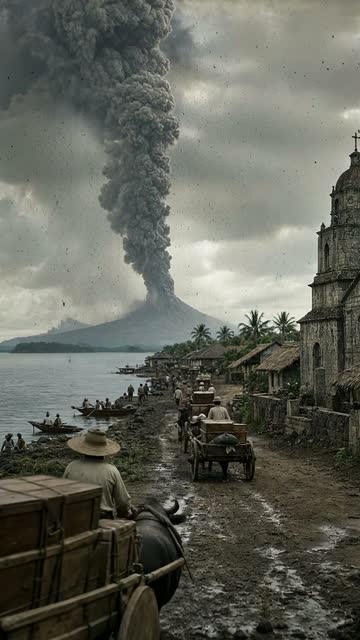
Tradition says Bicol is named for a bending river. On 1 February 1814 Mayon buried Cagsawa; the town moved to Daraga, and in 1914 the Bicol Region made a pilgrimage to the ruins.
Why It's Called That

Cagayan Valley
Cagayan Valley: the cave and the giant province
A foot bone found in Callao Cave in 2007 led to Homo luzonensis, a human species named in 2019. The valley above was once one province covering all of northeast Luzon.
This Happened Here
CALABARZON
CALABARZON: every name was something else
CALABARZON is made of five province names, and most of them changed. Batangas was Kumintang, then Taal; Quezon was Kalilayan, then Tayabas. Cavite's hook story is told as a tradition.
Why It's Called That


